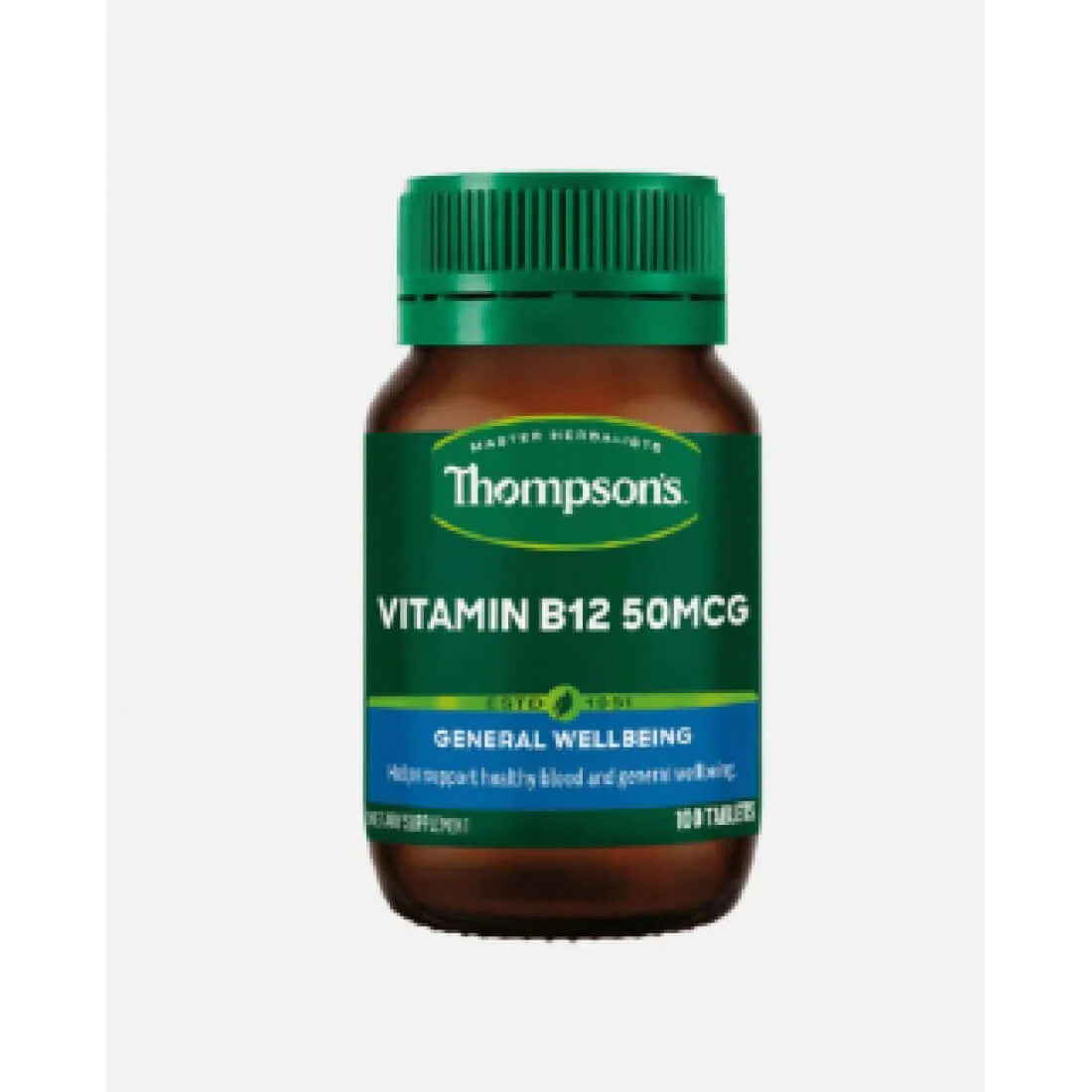
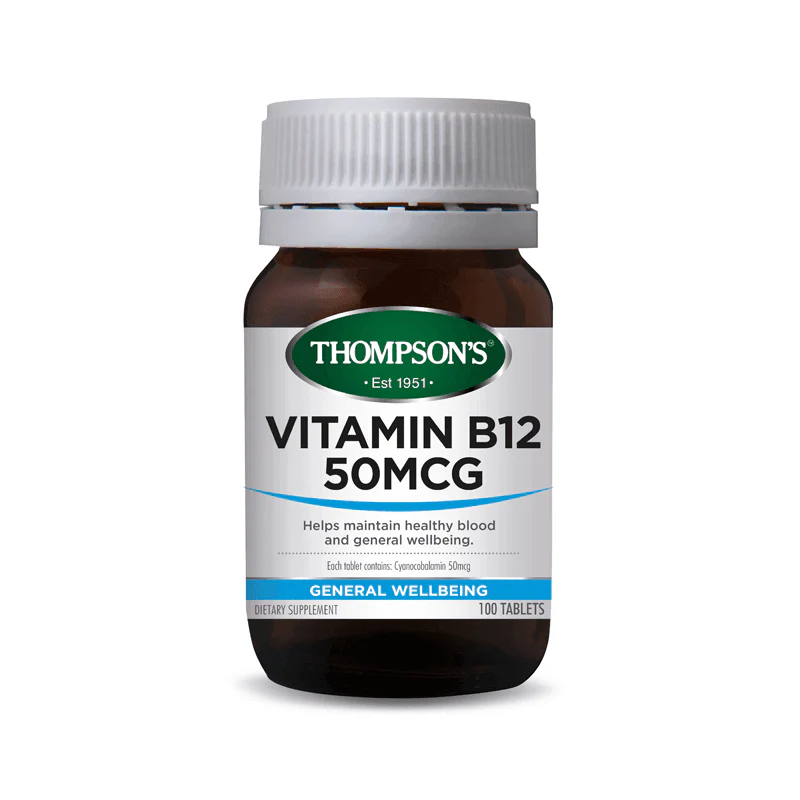
Thompsons Vitamin B12 50mcg 100 Tablets – Daily B12 for Healthy Blood, Nerves & Energy Metabolism
Thompsons Vitamin B12 50mcg 100 Tablets – Daily B12 Supplement for Healthy Blood, Nerves & Energy
Thompsons Vitamin B12 provides 50mcg of cyanocobalamin per tablet — a reliable, bioavailable form of vitamin B12 essential for healthy red blood cell production, nervous system function, DNA synthesis, and energy metabolism. B12 deficiency is one of the most common nutritional deficiencies, particularly in older adults, vegetarians, vegans, and people on metformin or proton pump inhibitors. Thompsons is one of New Zealand's most trusted vitamin brands.
- 50mcg Vitamin B12 (cyanocobalamin) per tablet
- Essential for healthy red blood cells and nerve function
- Supports energy metabolism and DNA synthesis
- Important for vegans, vegetarians, and older adults
- 100 tablets — Thompsons NZ quality
Frequently Asked Questions
Who is most at risk of B12 deficiency?
B12 deficiency is most common in: vegans and vegetarians (B12 occurs almost exclusively in animal foods), older adults (who produce less intrinsic factor needed to absorb B12), people taking metformin (for diabetes — it reduces B12 absorption), people on long-term proton pump inhibitors (PPIs), and those with autoimmune conditions (pernicious anaemia). Even moderate deficiency can cause significant neurological and blood changes.
What are the signs of B12 deficiency?
Signs include megaloblastic anaemia (large, immature red blood cells), fatigue and weakness, peripheral neuropathy (numbness/tingling in hands and feet), memory and cognitive difficulties, depression, glossitis (sore, inflamed tongue), and elevated homocysteine (cardiovascular risk marker). Neurological damage from prolonged B12 deficiency can be irreversible — early supplementation is important.
Is cyanocobalamin the best form of B12?
Cyanocobalamin is the most stable and most studied form of B12 — widely used in clinical trials and supplementation programmes. It is converted by the body to the active forms (methylcobalamin and adenosylcobalamin). Some people prefer methylcobalamin for its direct activity, particularly those with MTHFR gene variants who have difficulty with methyl group metabolism. Both forms are effective at 50mcg daily doses for most people.
Can I take 50mcg B12 daily even if I'm not deficient?
Yes. B12 is water-soluble and excess is excreted in urine — it is non-toxic at daily supplemental doses. Preventive supplementation at 50mcg daily is safe and widely recommended for at-risk groups, particularly vegans and adults over 50.
Do I need a prescription for B12 injections if I have pernicious anaemia?
Pernicious anaemia (autoimmune B12 deficiency) typically requires intramuscular B12 injections rather than oral supplementation, as the intrinsic factor needed for oral absorption is absent. If you have diagnosed pernicious anaemia, consult your GP about appropriate injection therapy. Oral high-dose B12 can work via passive absorption in some cases — discuss with your doctor.
Product Information
Product Information
Shipping & Returns
Shipping & Returns
Description
Thompsons Vitamin B12 50mcg 100 Tablets – Daily B12 Supplement for Healthy Blood, Nerves & Energy
Thompsons Vitamin B12 provides 50mcg of cyanocobalamin per tablet — a reliable, bioavailable form of vitamin B12 essential for healthy red blood cell production, nervous system function, DNA synthesis, and energy metabolism. B12 deficiency is one of the most common nutritional deficiencies, particularly in older adults, vegetarians, vegans, and people on metformin or proton pump inhibitors. Thompsons is one of New Zealand's most trusted vitamin brands.
- 50mcg Vitamin B12 (cyanocobalamin) per tablet
- Essential for healthy red blood cells and nerve function
- Supports energy metabolism and DNA synthesis
- Important for vegans, vegetarians, and older adults
- 100 tablets — Thompsons NZ quality
Frequently Asked Questions
Who is most at risk of B12 deficiency?
B12 deficiency is most common in: vegans and vegetarians (B12 occurs almost exclusively in animal foods), older adults (who produce less intrinsic factor needed to absorb B12), people taking metformin (for diabetes — it reduces B12 absorption), people on long-term proton pump inhibitors (PPIs), and those with autoimmune conditions (pernicious anaemia). Even moderate deficiency can cause significant neurological and blood changes.
What are the signs of B12 deficiency?
Signs include megaloblastic anaemia (large, immature red blood cells), fatigue and weakness, peripheral neuropathy (numbness/tingling in hands and feet), memory and cognitive difficulties, depression, glossitis (sore, inflamed tongue), and elevated homocysteine (cardiovascular risk marker). Neurological damage from prolonged B12 deficiency can be irreversible — early supplementation is important.
Is cyanocobalamin the best form of B12?
Cyanocobalamin is the most stable and most studied form of B12 — widely used in clinical trials and supplementation programmes. It is converted by the body to the active forms (methylcobalamin and adenosylcobalamin). Some people prefer methylcobalamin for its direct activity, particularly those with MTHFR gene variants who have difficulty with methyl group metabolism. Both forms are effective at 50mcg daily doses for most people.
Can I take 50mcg B12 daily even if I'm not deficient?
Yes. B12 is water-soluble and excess is excreted in urine — it is non-toxic at daily supplemental doses. Preventive supplementation at 50mcg daily is safe and widely recommended for at-risk groups, particularly vegans and adults over 50.
Do I need a prescription for B12 injections if I have pernicious anaemia?
Pernicious anaemia (autoimmune B12 deficiency) typically requires intramuscular B12 injections rather than oral supplementation, as the intrinsic factor needed for oral absorption is absent. If you have diagnosed pernicious anaemia, consult your GP about appropriate injection therapy. Oral high-dose B12 can work via passive absorption in some cases — discuss with your doctor.