
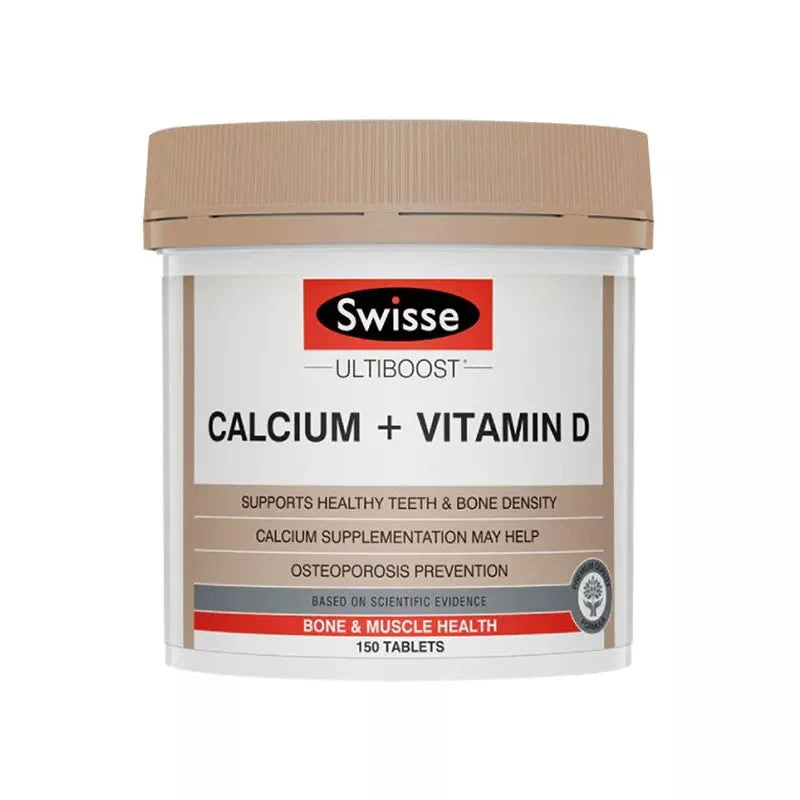
Swisse Ultiboost Calcium + Vitamin D 150 Tablets – Daily Calcium & D3 Supplement for Bone, Teeth & Muscle Health
Swisse Ultiboost Calcium + Vitamin D 150 Tablets – Daily Calcium & D3 Supplement for Bone, Teeth & Muscle Health
Swisse Ultiboost Calcium + Vitamin D combines calcium carbonate with Vitamin D3 — the essential pairing for effective bone and teeth health. Vitamin D3 is required to absorb calcium from the gut into the bloodstream; without adequate vitamin D, most supplemental calcium passes through unabsorbed. This formula ensures maximum calcium utilisation for bone mineralisation, teeth strength, muscle function, and nerve transmission. 150 tablets per pack — excellent value for daily use.
- Calcium for bone mineralisation, teeth strength, and muscle function
- Vitamin D3 for maximum calcium absorption and immune support
- 150 tablets — great value for ongoing daily use
- Supports bone density maintenance and osteoporosis prevention
- Swisse Ultiboost — premium Australian quality
Frequently Asked Questions
Why do you need Vitamin D with Calcium?
Vitamin D is essential for calcium absorption in the intestine — it controls the expression of calcium transport proteins that move calcium from the gut into the bloodstream. Without adequate Vitamin D, only 10–15% of dietary calcium is absorbed; with sufficient D, absorption increases to 30–40%. Taking calcium without Vitamin D significantly reduces its effectiveness for bone health.
Who is most at risk of calcium deficiency in New Zealand?
Common risk groups include post-menopausal women (oestrogen decline accelerates bone calcium loss), teenagers (rapid bone growth increases needs), older adults (reduced dietary intake and D absorption), vegans and dairy-free individuals (low dietary calcium), and those with malabsorption conditions (coeliac, Crohn's, bariatric surgery). Vitamin D deficiency is also widespread in NZ, particularly in winter and in people with limited sun exposure.
Is calcium carbonate well absorbed?
Calcium carbonate is best absorbed when taken with food (stomach acid aids dissolution). For best absorption, split the daily dose across 2–3 meals rather than taking the full daily dose at once — the body can only actively absorb a limited amount of calcium at one time (approximately 500mg per serving).
Can taking calcium supplements cause kidney stones?
High-dose supplemental calcium (particularly taken without food) has been associated with increased kidney stone risk in some research. Taking calcium with meals (rather than between meals) significantly reduces this risk by binding dietary oxalate in the gut rather than being excreted through the kidneys. Maintaining adequate hydration also reduces kidney stone risk during calcium supplementation.
Is Swisse Ultiboost Calcium + Vitamin D suitable for teenagers and children?
Yes. Adequate calcium and Vitamin D during adolescence is critical for achieving peak bone density (which is largely established by age 25–30) — directly influencing osteoporosis risk later in life. Check age-appropriate dosing on the label for children and teenagers.
Product Information
Product Information
Shipping & Returns
Shipping & Returns
Description
Swisse Ultiboost Calcium + Vitamin D 150 Tablets – Daily Calcium & D3 Supplement for Bone, Teeth & Muscle Health
Swisse Ultiboost Calcium + Vitamin D combines calcium carbonate with Vitamin D3 — the essential pairing for effective bone and teeth health. Vitamin D3 is required to absorb calcium from the gut into the bloodstream; without adequate vitamin D, most supplemental calcium passes through unabsorbed. This formula ensures maximum calcium utilisation for bone mineralisation, teeth strength, muscle function, and nerve transmission. 150 tablets per pack — excellent value for daily use.
- Calcium for bone mineralisation, teeth strength, and muscle function
- Vitamin D3 for maximum calcium absorption and immune support
- 150 tablets — great value for ongoing daily use
- Supports bone density maintenance and osteoporosis prevention
- Swisse Ultiboost — premium Australian quality
Frequently Asked Questions
Why do you need Vitamin D with Calcium?
Vitamin D is essential for calcium absorption in the intestine — it controls the expression of calcium transport proteins that move calcium from the gut into the bloodstream. Without adequate Vitamin D, only 10–15% of dietary calcium is absorbed; with sufficient D, absorption increases to 30–40%. Taking calcium without Vitamin D significantly reduces its effectiveness for bone health.
Who is most at risk of calcium deficiency in New Zealand?
Common risk groups include post-menopausal women (oestrogen decline accelerates bone calcium loss), teenagers (rapid bone growth increases needs), older adults (reduced dietary intake and D absorption), vegans and dairy-free individuals (low dietary calcium), and those with malabsorption conditions (coeliac, Crohn's, bariatric surgery). Vitamin D deficiency is also widespread in NZ, particularly in winter and in people with limited sun exposure.
Is calcium carbonate well absorbed?
Calcium carbonate is best absorbed when taken with food (stomach acid aids dissolution). For best absorption, split the daily dose across 2–3 meals rather than taking the full daily dose at once — the body can only actively absorb a limited amount of calcium at one time (approximately 500mg per serving).
Can taking calcium supplements cause kidney stones?
High-dose supplemental calcium (particularly taken without food) has been associated with increased kidney stone risk in some research. Taking calcium with meals (rather than between meals) significantly reduces this risk by binding dietary oxalate in the gut rather than being excreted through the kidneys. Maintaining adequate hydration also reduces kidney stone risk during calcium supplementation.
Is Swisse Ultiboost Calcium + Vitamin D suitable for teenagers and children?
Yes. Adequate calcium and Vitamin D during adolescence is critical for achieving peak bone density (which is largely established by age 25–30) — directly influencing osteoporosis risk later in life. Check age-appropriate dosing on the label for children and teenagers.


