
Baby4You Ovulation Test Kit – LH Surge Detection Tests for Fertility Tracking & Conception Planning
Baby4You Ovulation Test Kit – Accurate LH Surge Detection for Fertility Tracking
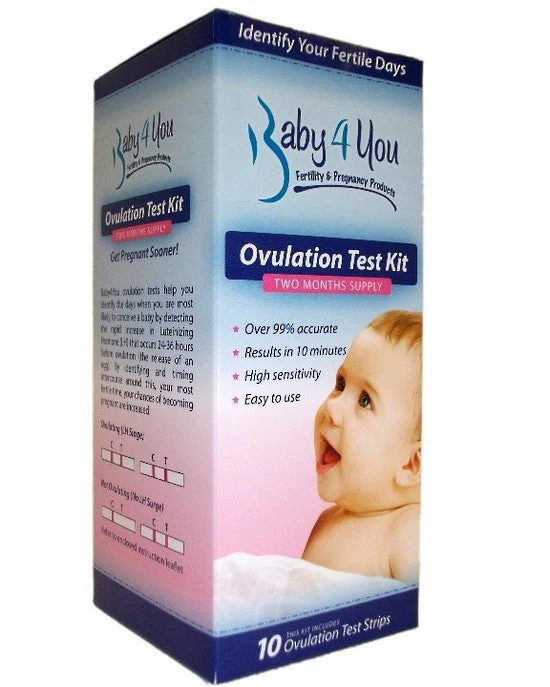
Baby4You Ovulation Tests are designed with compassion to support you on your journey to parenthood. They detect the luteinising hormone (LH) surge that occurs 24–36 hours before ovulation — your most fertile window. With clear, easy-to-read results and high sensitivity, Baby4You ovulation tests help you identify your best days to conceive, giving you two months of comprehensive testing.
- Detects LH surge 24–36 hours before ovulation
- High sensitivity for early LH detection
- Identifies your most fertile window
- Two months of testing included
- Easy-to-read results — clear positive and negative display
Frequently Asked Questions
How does an ovulation test work?
Ovulation tests detect the rise in luteinising hormone (LH) in urine. LH surges 24–36 hours before the egg is released from the ovary. By testing daily during your expected fertile window, you can identify this surge and time intercourse for the best chance of conception.
When should I start testing in my cycle?
Count forward from the first day of your last period. For a 28-day cycle, start testing around day 10–11. For shorter cycles, start earlier; for longer cycles, start later. Check the Baby4You instructions for a cycle-length reference guide.
What does a positive ovulation test look like?
A positive result shows a test line as dark as or darker than the control line. A faint test line does NOT indicate a positive — LH must reach a threshold to confirm the surge. Take your most fertile intercourse within 24–36 hours of a positive result.
Can ovulation tests confirm pregnancy?
No. Ovulation tests detect LH, not hCG (the pregnancy hormone). A positive ovulation test does not mean you are pregnant. Use a separate pregnancy test if you have missed a period or suspect pregnancy.
Should I test at the same time each day?
Yes. Test at the same time each day, ideally in the afternoon (between 12pm and 8pm) when LH is more concentrated. Avoid testing with first morning urine and don't drink excessive fluids before testing as this can dilute the LH level.
Product Information
Product Information
Shipping & Returns
Shipping & Returns
Description
Baby4You Ovulation Test Kit – Accurate LH Surge Detection for Fertility Tracking
Baby4You Ovulation Tests are designed with compassion to support you on your journey to parenthood. They detect the luteinising hormone (LH) surge that occurs 24–36 hours before ovulation — your most fertile window. With clear, easy-to-read results and high sensitivity, Baby4You ovulation tests help you identify your best days to conceive, giving you two months of comprehensive testing.
- Detects LH surge 24–36 hours before ovulation
- High sensitivity for early LH detection
- Identifies your most fertile window
- Two months of testing included
- Easy-to-read results — clear positive and negative display
Frequently Asked Questions
How does an ovulation test work?
Ovulation tests detect the rise in luteinising hormone (LH) in urine. LH surges 24–36 hours before the egg is released from the ovary. By testing daily during your expected fertile window, you can identify this surge and time intercourse for the best chance of conception.
When should I start testing in my cycle?
Count forward from the first day of your last period. For a 28-day cycle, start testing around day 10–11. For shorter cycles, start earlier; for longer cycles, start later. Check the Baby4You instructions for a cycle-length reference guide.
What does a positive ovulation test look like?
A positive result shows a test line as dark as or darker than the control line. A faint test line does NOT indicate a positive — LH must reach a threshold to confirm the surge. Take your most fertile intercourse within 24–36 hours of a positive result.
Can ovulation tests confirm pregnancy?
No. Ovulation tests detect LH, not hCG (the pregnancy hormone). A positive ovulation test does not mean you are pregnant. Use a separate pregnancy test if you have missed a period or suspect pregnancy.
Should I test at the same time each day?
Yes. Test at the same time each day, ideally in the afternoon (between 12pm and 8pm) when LH is more concentrated. Avoid testing with first morning urine and don't drink excessive fluids before testing as this can dilute the LH level.