
Allcare Foam Roller Full Round 30cm Blue – Physiotherapy Foam Roller for Muscle Recovery, Flexibility & Core Training
Allcare Foam Roller Full Round 30cm Blue – Physiotherapy Foam Roller for Muscle Recovery, Flexibility & Core Training
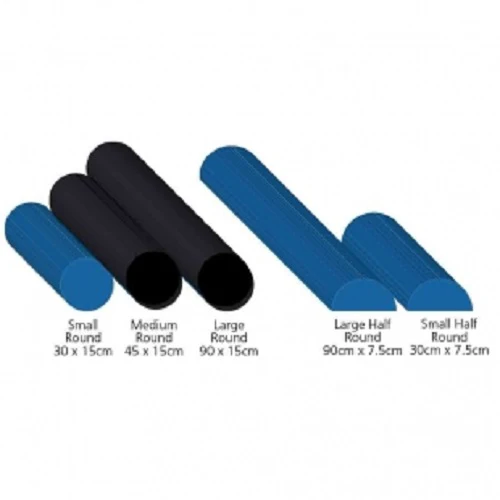
The Allcare Full Round Foam Roller (30cm, Blue) is a versatile physiotherapy tool for developing balance, coordination, body awareness, flexibility, dynamic strength, and muscle recovery. The full round design allows rolling in all directions for comprehensive myofascial release (self-massage of the fascial tissue surrounding muscles) and is also used as a proprioceptive training tool in rehabilitation, pilates, and fitness programmes. Suitable for all fitness levels from rehabilitation through to elite sport.
- Full round design — roll in all directions for complete myofascial release
- Develops balance, coordination, body awareness, and proprioception
- Supports muscle recovery, flexibility, and dynamic strength
- Suitable for physiotherapy, rehabilitation, pilates, and fitness
- 30cm — Allcare quality physiotherapy equipment
Frequently Asked Questions
What is myofascial release with a foam roller?
Myofascial release (MFR) is a self-massage technique that applies sustained pressure to the fascia — the connective tissue that surrounds and connects muscles. Rolling over tight areas breaks up adhesions and trigger points in the muscle-fascia complex, reducing muscle tension, improving circulation, restoring tissue mobility, and reducing post-exercise soreness. Foam rolling is effectively the same as a sports massage for deep tissue restoration.
When should I use a foam roller — before or after exercise?
Both have different benefits. Pre-workout: use for 5–10 minutes to increase tissue temperature, improve mobility, and reduce restrictions before activity. Post-workout: use for 10–15 minutes to reduce lactic acid accumulation, reduce DOMS (delayed onset muscle soreness), and restore normal tissue length. Daily use — even on rest days — provides ongoing maintenance of tissue health and flexibility.
Which muscle groups can I target with a foam roller?
A full round roller can target virtually all major muscle groups: calves, hamstrings, quadriceps, IT band, glutes, hip flexors, thoracic spine (upper back), lats, and chest. It can also be used for balance and proprioceptive training (standing, kneeling, or sitting on the roller) in rehabilitation and fitness programmes.
Is foam rolling suitable for people with lower back pain?
For lower back pain, foam rolling should be applied to the muscles around the lower back (glutes, hip flexors, thoracic spine) rather than directly under the lumbar spine. Direct rolling of the lumbar spine can aggravate disc or facet joint problems. Consult your physiotherapist for guidance on foam rolling technique for lower back conditions.
How firm is the Allcare Full Round Foam Roller?
The Allcare Full Round Foam Roller is a medium-firm standard density roller — suitable for beginners and general use. For deeper tissue work or more experienced users, a higher-density or textured roller may be preferred. For rehabilitation post-injury, a softer roller is often more appropriate initially.
Product Information
Product Information
Shipping & Returns
Shipping & Returns
Description
Allcare Foam Roller Full Round 30cm Blue – Physiotherapy Foam Roller for Muscle Recovery, Flexibility & Core Training
The Allcare Full Round Foam Roller (30cm, Blue) is a versatile physiotherapy tool for developing balance, coordination, body awareness, flexibility, dynamic strength, and muscle recovery. The full round design allows rolling in all directions for comprehensive myofascial release (self-massage of the fascial tissue surrounding muscles) and is also used as a proprioceptive training tool in rehabilitation, pilates, and fitness programmes. Suitable for all fitness levels from rehabilitation through to elite sport.
- Full round design — roll in all directions for complete myofascial release
- Develops balance, coordination, body awareness, and proprioception
- Supports muscle recovery, flexibility, and dynamic strength
- Suitable for physiotherapy, rehabilitation, pilates, and fitness
- 30cm — Allcare quality physiotherapy equipment
Frequently Asked Questions
What is myofascial release with a foam roller?
Myofascial release (MFR) is a self-massage technique that applies sustained pressure to the fascia — the connective tissue that surrounds and connects muscles. Rolling over tight areas breaks up adhesions and trigger points in the muscle-fascia complex, reducing muscle tension, improving circulation, restoring tissue mobility, and reducing post-exercise soreness. Foam rolling is effectively the same as a sports massage for deep tissue restoration.
When should I use a foam roller — before or after exercise?
Both have different benefits. Pre-workout: use for 5–10 minutes to increase tissue temperature, improve mobility, and reduce restrictions before activity. Post-workout: use for 10–15 minutes to reduce lactic acid accumulation, reduce DOMS (delayed onset muscle soreness), and restore normal tissue length. Daily use — even on rest days — provides ongoing maintenance of tissue health and flexibility.
Which muscle groups can I target with a foam roller?
A full round roller can target virtually all major muscle groups: calves, hamstrings, quadriceps, IT band, glutes, hip flexors, thoracic spine (upper back), lats, and chest. It can also be used for balance and proprioceptive training (standing, kneeling, or sitting on the roller) in rehabilitation and fitness programmes.
Is foam rolling suitable for people with lower back pain?
For lower back pain, foam rolling should be applied to the muscles around the lower back (glutes, hip flexors, thoracic spine) rather than directly under the lumbar spine. Direct rolling of the lumbar spine can aggravate disc or facet joint problems. Consult your physiotherapist for guidance on foam rolling technique for lower back conditions.
How firm is the Allcare Full Round Foam Roller?
The Allcare Full Round Foam Roller is a medium-firm standard density roller — suitable for beginners and general use. For deeper tissue work or more experienced users, a higher-density or textured roller may be preferred. For rehabilitation post-injury, a softer roller is often more appropriate initially.